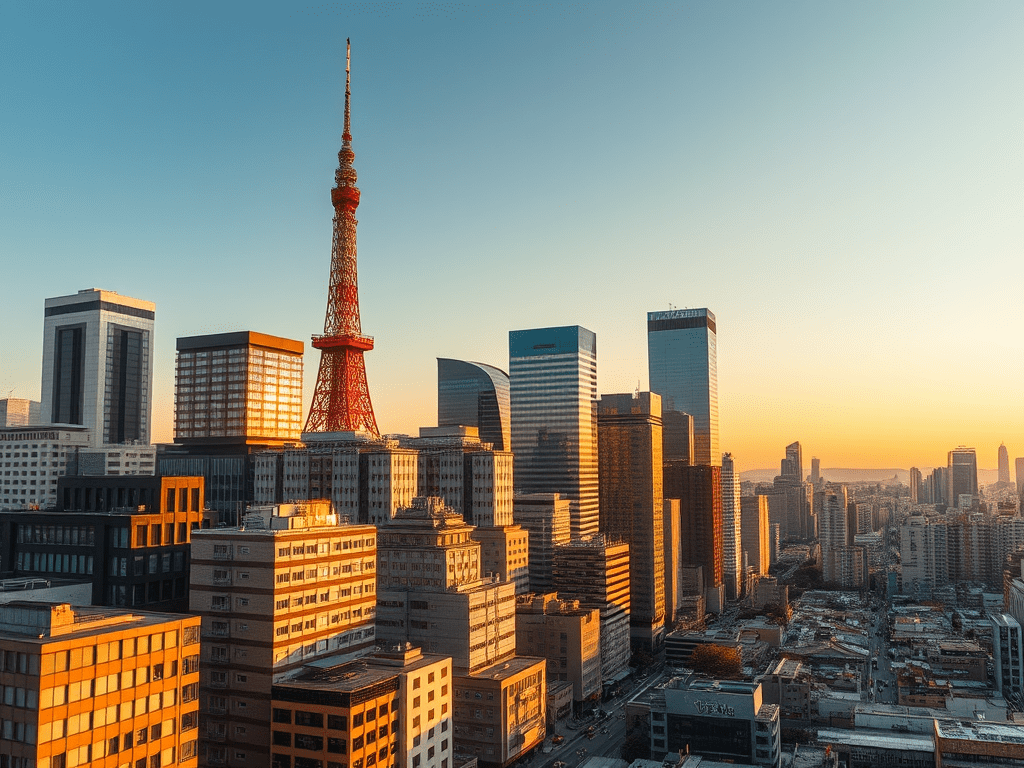
Japan’s real estate market has been experiencing notable transformations, driven by economic growth, demographic shifts, and evolving investment trends. Here’s an overview of the current landscape:
Land Prices Surge
In 2024, Japan’s land prices saw a significant increase, marking the fastest rise in 34 years. The average nationwide prices for residential and commercial properties climbed by 2.7%, marking the fourth consecutive year of gains. This surge is attributed to steady economic growth and a boost in inbound tourism. Notably, about 64% of surveyed plots have surpassed pre-pandemic levels. Both major metropolitan areas like Tokyo, Osaka, and Nagoya, as well as regional cities such as Sapporo, Sendai, Hiroshima, and Fukuoka, have experienced these gains. Residential land prices rose by 2.1%, while commercial land prices grew by 3.9%, supported by tourism. Industrial areas saw a 4.8% increase due to the development of large-scale logistics facilities.
Tokyo’s Property Boom
Tokyo’s property market is experiencing a significant boom, driven by low interest rates, a strong office-going culture post-Covid, rising tourism due to the weak yen, and financial incentives for companies to sell non-core assets. Office vacancy rates are around 3%, significantly lower than New York’s 15% and London’s 8%. Real estate transaction volumes reached $23.6 billion in the first half of 2024, an increase of nearly 30% compared to early 2022. Capital and income returns have increased to 4.8% annually by mid-2024, despite declines seen in the US, UK, and Australia. Major deals, like Seibu’s sale of a central Tokyo office building for $1.95 billion, reflect the market’s vibrancy. Although the Bank of Japan is cautiously adjusting interest rates, the modest increases expected should be manageable for buyers. However, the high real estate loans and elevated price-to-rent ratios suggest potential overheating risks, though the market currently remains balanced with sufficient big buyers and sellers.
Foreign Investment and Resort Development
Japan’s real estate market continues to attract foreign investors, particularly in resort areas. In Myoko, a ski resort area, a $1.4 billion mega-resort project by Singapore’s Patience Capital Group is set to open in three years, potentially creating 1,000 jobs and boosting winter tourism. However, locals express concerns about potential overdevelopment, high prices, and cultural erosion, drawing parallels to changes observed in other resorts like Niseko and Hakuba.
Opportunities and Challenges
The Japanese real estate market presents a mix of opportunities and challenges. Technological advancements and urban redevelopment are contributing to market growth, while the aging population introduces new investment avenues, such as senior housing. However, potential investors should be mindful of higher construction costs and the possibility of interest rate hikes by the Bank of Japan, which could impact borrowing costs.
In summary, Japan’s real estate market is undergoing dynamic changes, offering both opportunities and challenges for investors, residents, and policymakers alike.
At Chrysalis Tokyo we can help you navigate the market and choose the right partner for your investment.
 Chrysalis Tokyo
Leave a comment